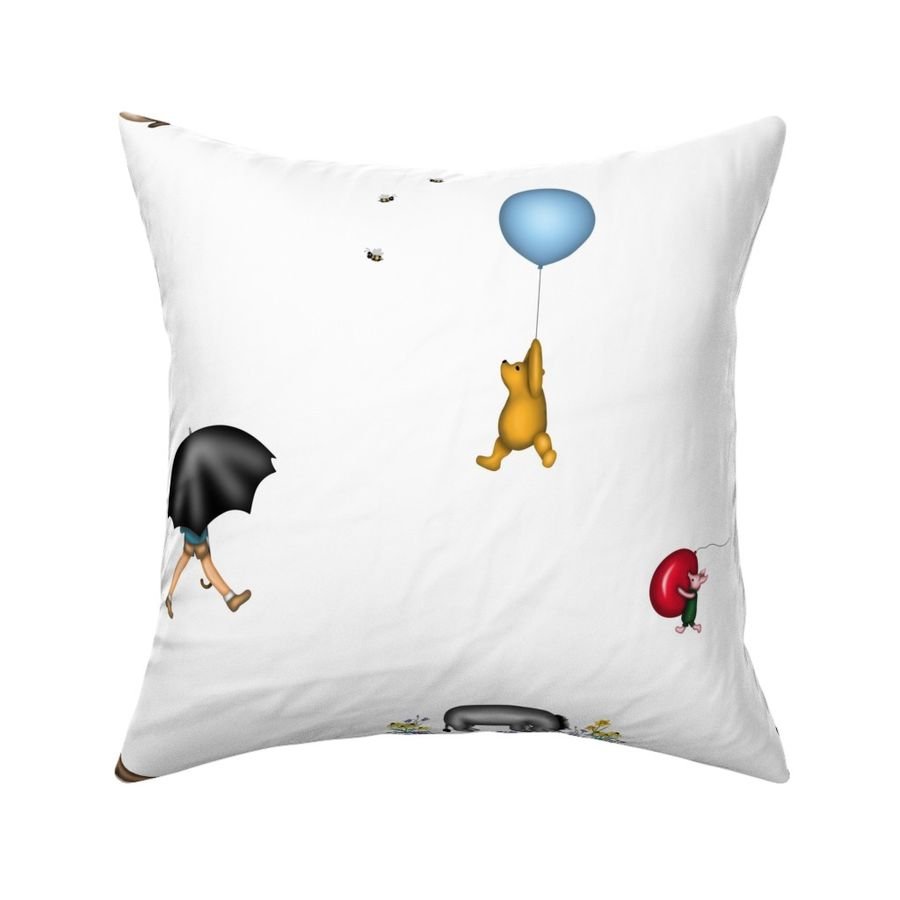
The rustle of autumn leaves, the gentle hum of bees, and the unforgettable echo of a little bear's tummy rumbling for honey – these are the indelible hallmarks of The Hundred Acre Wood Characters & Their Enduring Appeal. Far more than just a collection of children's stories, the tales woven by A.A. Milne, and later expanded by others, offer a sanctuary of friendship, imagination, and quiet wisdom that continues to captivate hearts across generations.
This isn't just a guide to the residents of that magical forest; it's an exploration into why these whimsical personalities resonate so deeply, why their simple adventures feel so profound, and how their legacy has shaped culture worldwide.
At a Glance: What Makes the Hundred Acre Wood So Special
- Inspired by Reality: The fictional Hundred Acre Wood is a charming mirror of England’s real Ashdown Forest, where A.A. Milne’s son, Christopher Robin, played.
- A Cast of Archetypes: Each character embodies universal human traits – from Pooh's simple loyalty to Eeyore's lovable gloom, making them incredibly relatable.
- Timeless Themes: At its core, the series champions friendship, imagination, kindness, and finding joy in the everyday.
- Evolving Legacy: While Milne’s original books set the stage, Disney and authorized sequels have introduced new characters and expanded the universe.
- Global Phenomenon: The characters transcend books and films, appearing in games, merchandise, and even inspiring real-world conservation efforts.
The Hundred Acre Wood: A Real-Life Fantasy
Before we meet its charming inhabitants, it’s worth understanding that the Hundred Acre Wood is more than just a figment of a writer's imagination. It’s a place rooted in the very real, very beautiful landscape of Ashdown Forest in East Sussex, England.
When A.A. Milne purchased Cotchford Farm in 1925, he found inspiration in the 6,500 acres of heathland and ancient woodlands surrounding his home. His young son, Christopher Robin, would play amidst these natural wonders with his beloved stuffed animals, unknowingly laying the foundation for one of literature's most cherished settings. The very name, "Hundred Acre Wood," echoes Ashdown Forest’s real Five Hundred Acre Wood, and iconic locations like Poohsticks Bridge (Posingford Bridge) and the Enchanted Place (Gill's Lap) have real-life counterparts you can still visit today. Illustrator E.H. Shepard, whose iconic drawings define the look of the books, drew directly from these same pastoral scenes.
This connection to a tangible, natural world gives the Hundred Acre Wood a grounded enchantment. It’s a place where imagination can run wild, yet it always feels safe, familiar, and wonderfully real. This authenticity is a crucial ingredient in the enduring appeal of its residents, allowing readers to step directly into their world.
Meet the Original Residents: Milne's Core Cast
A.A. Milne’s original books, Winnie-the-Pooh (1926) and The House at Pooh Corner (1928), introduced a small, perfectly formed community. These characters, mostly based on Christopher Robin Milne's own toys, are the heart and soul of the Hundred Acre Wood.
Pooh: The Simple-Hearted Bear
Winnie-the-Pooh, often simply called Pooh, is the golden teddy bear at the center of it all. He's known for his boundless love of honey (or "hunny"), his occasional forgetfulness, and his endearing self-assessment of having "very little brain." Yet, Pooh is arguably the wisest of the group in matters of the heart. He embodies simplicity, loyalty, and an unshakeable kindness. Pooh resides in a cozy hollow within a large oak tree, always ready for an adventure, a thoughtful hum, or a snack with his friends. His unwavering optimism and genuine affection for those around him make him the comforting anchor of the Hundred Acre Wood.
Piglet: Bravery in a Small Package
Small, timid, and easily flustered, Piglet is Pooh’s most devoted companion. Despite his anxieties, Piglet frequently demonstrates quiet courage, often overcoming his fears for the sake of his friends. He lives in a charming, though sometimes precarious, stick-and-thatch house. Piglet’s character reminds us that strength comes in many forms, and that even the smallest among us can possess the greatest bravery and loyalty. His gentle nature and deep affection for Pooh are central to the series' themes of friendship.
Tigger: The Joyful Jumper
Bouncing into the stories in The House at Pooh Corner, Tigger is a vibrant, exuberant tiger with an infectious zest for life. He's full of boundless energy, boasts about his unique "Tiggerific" qualities, and loves to bounce – often to the minor inconvenience of his friends. Tigger's enthusiasm and playful spirit are a constant source of cheer and mild chaos. He teaches us to embrace our unique qualities and to approach life with an open, bouncing heart.
Rabbit: The Practical Planner
Rabbit is the self-appointed organizer and leader of the Hundred Acre Wood. Fussy, fastidious, and fond of order, he meticulously tends to his tidy garden burrow and often finds himself exasperated by the unpredictable antics of his friends. Unlike many of the other characters, Rabbit was not based on one of Christopher Robin's stuffed toys, but was an invention of Milne's. His practical nature and occasional bossiness provide a humorous contrast to the dreamier qualities of the other animals, showing the importance of different personalities in a community.
Owl: The Self-Proclaimed Sage
Owl is the resident intellectual, or so he believes. He fancies himself an authority on most subjects, offering long-winded advice and elaborate explanations, often riddled with delightful errors. Owl lives in a grand tree hollow, a suitable dwelling for someone who considers himself above the common fray. Also not based on a toy, Owl's character gently pokes fun at pretension, reminding us that true wisdom often comes from simplicity rather than grand pronouncements.
Eeyore: The Melancholy Philosopher
The gloomy donkey, Eeyore, is a master of understated pessimism. He perpetually expects the worst, sees clouds on the sunniest days, and views every situation with a sigh. Yet, beneath his melancholic exterior lies a deeply appreciative heart, especially for small kindnesses from his friends. Eeyore resides in a rather ramshackle corner of the wood, constantly losing his tail. His character provides a tender exploration of sadness and acceptance, showing that even those who are consistently down can find comfort and belonging.
Kanga & Roo: Maternal Love and Childhood Curiosity
Kanga is the loving, devoted mother kangaroo, always watchful over her playful and curious joey, Roo. They represent the warmth of family and the innocence of childhood. Kanga’s calm, nurturing presence grounds the more rambunctious characters, while Roo’s energetic explorations often lead to new discoveries and adventures. They live in a sandy pit east of Pooh’s tree, bringing a gentle domesticity to the wilder parts of the forest.
Christopher Robin: The Bridge to Imagination
The only human character, Christopher Robin is the imaginative young boy who connects with all the animals. Modeled directly after A.A. Milne's son, he is the benevolent leader, the problem-solver, and the beloved friend who shares his world and his imagination with the toys. Christopher Robin represents the pure, untainted wonder of childhood, the ability to see magic in the mundane, and the power of a child's imagination to bring a world to life.
Navigating the Enchanted Map
E. H. Shepard’s iconic 1926 endpaper map isn’t just a pretty illustration; it’s a geographical blueprint that reinforces the sense of a real, navigable world. Christopher Robin’s house marks the southern edge, a starting point for many adventures. Pooh’s oak tree is near the eastern boundary, a comforting central hub. Piglet’s modest home nestles in a beech wood to the northeast, while Rabbit’s meticulous garden dominates the southwestern quadrant. Owl’s grand residence is a tall tree near Piglet’s, and Eeyore’s perpetually damp and gloomy corner is to the northwest. Kanga and Roo’s sandy pit sits east of Pooh’s tree. Further north, the famous Poohsticks Bridge invites games and contemplation, leading to the ultimate destination: the hidden, magical glade of The Enchanted Place (Galleon's Lap) in the far north. This detailed geography helps to ground the fantastical elements, making the Hundred Acre Wood feel like a real, traversable place in the minds of readers.
Expanding the Family: Disney's Newcomers
While A.A. Milne laid the foundational stones, Disney's animated adaptations, beginning in 1966, dramatically expanded the Hundred Acre Wood's global reach and introduced new characters that have since become beloved mainstays for many.
Gopher: The Unofficial Addition
Perhaps the most famous Disney-only character, Gopher is an anthropomorphic ground squirrel, first introduced in Winnie the Pooh and the Honey Tree (1966). A hardworking, slightly grumpy mechanic who lives in an intricate network of tunnels, Gopher famously declares, "I'm not in the book!" This self-aware line became a running gag, playfully acknowledging his status as an original Disney creation. Gopher adds a dose of pragmatic, albeit often cynical, energy to the wood.
Heffalumps & Woozles: From Fear to Friendship
Initially appearing in Pooh’s anxious hallucinations in Winnie the Pooh and the Blustery Day (1968), Heffalumps and Woozles were terrifying, imaginary honey thieves. They represented the abstract fears of childhood. Over time, however, Disney transformed them from menacing phantoms into tangible, sometimes friendly, characters. Pooh's Heffalump Movie (2005) introduced Lumpy (Heffridge Trumpler Brompet Heffalump IV), a sweet, innocent young Heffalump who quickly befriends Roo, demonstrating the power of understanding over fear. Similarly, Stan the Woozle, a sly but often bumbling thief from The New Adventures of Winnie the Pooh (1988–1991), became a recurring presence, showing the evolution of these once-imaginary threats.
Darby & Beaver: Modern Companions
In the CGI-animated series My Friends Tigger & Pooh (2007–2010), the Hundred Acre Wood saw its most significant modern update. Christopher Robin was replaced by Darby, a six-year-old human girl who, alongside her dog Buster, leads the "Super Sleuths" (Pooh and Tigger). This shift aimed to connect with a new generation of viewers, offering a contemporary human companion for the animals. The series also introduced Beaver, a practical and helpful rodent who often assists the Sleuths with their problem-solving. These characters broadened the narrative possibilities, albeit departing significantly from Milne's original vision.
Beyond Disney: Authorized Sequels and Fresh Faces
The Milne Estate has, at various points, authorized sequels that have introduced new characters, expanding the canonical universe beyond Disney’s influence while striving to maintain the original spirit.
- Lottie the Otter: David Benedictus's Return to the Hundred Acre Wood (2009) brought Lottie, a stylish, no-nonsense otter who becomes the only female character besides Kanga. She is described as a strong swimmer and a stickler for rules, adding a new dynamic to the group.
- Penguin: In The Best Bear in All the World (2016), a reserved bird simply named Penguin joins the friends. This character was inspired by a historical photograph of A.A. Milne and his son with a toy penguin, linking the new addition back to the real-life origins of the stories.
- Carmen: Jane Riordan's Winnie-the-Pooh: Tales from the Forest (2023) introduced Carmen, a loyal dog character. Like Penguin, Carmen's inclusion was a nod to Milne's own stuffed toy collection, further blending the real and fictional worlds that inspired the original stories.
These authorized additions show an ongoing desire to keep the Hundred Acre Wood vibrant and relevant, carefully weaving new threads into the rich tapestry of Milne’s creation.
The Undeniable Magic: Why These Characters Endure
The true magic of The Hundred Acre Wood isn’t just in its charming stories or delightful drawings; it’s in the characters themselves and the profound, yet simple, truths they embody. Their appeal has lasted for nearly a century because they tap into universal human experiences.
Relatability and Archetypes
Each character, despite being an animal or a stuffed toy, acts as a recognizable human archetype. Pooh is the simple, kind-hearted friend; Piglet, the anxious but brave soul; Eeyore, the lovable pessimist; Tigger, the exuberant optimist. We see ourselves, our friends, and our families in them. This relatability creates an immediate emotional connection, making their triumphs and struggles feel intimately familiar. It’s why you might describe a friend as "a bit of an Eeyore" or a child as "a bouncing Tigger" – these characters have become shorthand for personality types.
The Power of Simple Friendship
At its core, the Hundred Acre Wood is a celebration of uncomplicated, unconditional friendship. The characters accept each other exactly as they are, flaws and all. Pooh never tries to cheer Eeyore up with grand gestures, but with quiet companionship or a thoughtfully chosen pot of honey. Piglet’s smallness is never a barrier to his belonging. This portrayal of genuine connection, mutual support, and acceptance is a powerful draw in a world that often feels complex and conditional. It reminds us of the profound value of simply being there for one another.
A Gentle Guide to Life's Lessons
Milne's stories subtly impart gentle life lessons without ever preaching. They explore themes of courage, loyalty, resilience, and the importance of imagination. They show how different personalities can coexist and thrive together, and how even small acts of kindness can make a significant difference. Pooh's innocent observations often contain profound wisdom, making the stories both entertaining for children and surprisingly insightful for adults. Revisiting them, you often discover new layers of meaning, a testament to their understated depth. For many, these characters provide a comforting touchstone, a way to connect with The Classic Winnie the Pooh stories that feel like home.
Nostalgia and Intergenerational Connection
For countless adults, the Hundred Acre Wood characters evoke a powerful sense of nostalgia, transporting them back to the innocence of their own childhoods. This makes them a perfect vehicle for intergenerational bonding. Parents and grandparents delight in sharing these stories with younger generations, passing down not just tales, but also a shared cultural heritage and the comfort of cherished memories. This cycle of sharing ensures the characters remain fresh and relevant, continually finding new audiences who fall in love with their charm.
A Universe of Adaptations: From Page to Screen and Beyond
The enduring appeal of the Hundred Acre Wood characters has propelled them far beyond the pages of Milne's books, transforming them into a multimedia phenomenon that touches nearly every aspect of popular culture.
The Evolution of Animation
The characters' journey into animation began with Disney's traditional 2D hand-drawn shorts, starting with Winnie the Pooh and the Honey Tree in 1966. These iconic animations cemented the visual style and voices that many now associate with the characters. However, Disney wasn't alone. A lesser-known but equally beloved Soviet trilogy of Winnie-the-Pooh films, with a distinct animation style, aired between 1969 and 1972. In more recent years, adaptations have evolved further, including the live-action/CGI-integrated film Christopher Robin (2018), which beautifully brought the beloved toys to life in a more realistic setting, notably filming parts at the real Ashdown Forest. Modern streaming platforms continue the tradition with new 2D styles, such as Playdate with Winnie the Pooh (2023–present), demonstrating the characters' adaptability across various artistic interpretations.
Digital Adventures: Gaming and Apps
The Hundred Acre Wood has also found its way into the digital realm, offering interactive experiences for fans. From its dreamlike appearance as a world in the popular Kingdom Hearts video game series (starting in 2002), where Pooh and friends represent themes of memory and heart, to platformers like Tigger's Honey Hunt (2000), these games allow players to engage directly with the characters and their world. Educational mobile apps, such as Disney's Winnie the Pooh Wonder & Wander app, further extend their reach, blending entertainment with learning for the youngest fans.
The Commercial Empire: Toys, Parks, and VR
The commercialization of Winnie-the-Pooh began surprisingly early, with stuffed animals appearing as early as the 1930s. However, it truly exploded after Disney acquired licensing rights in 1961. By the late 1990s, Pooh products were generating an estimated $1 billion annually in licensing revenue, a testament to the characters' immense popularity.
Today, the merchandise ranges from classic plush toys to the strategic, yet playful, Poohsticks board game. In 2021, LEGO delighted fans with the intricately designed LEGO Ideas Winnie the Pooh (21326) set, featuring 1,265 pieces that recreate Pooh's house and its inhabitants. The characters are central to theme park attractions, such as Pooh's Playful Spot at Magic Kingdom, offering immersive experiences. Even virtual reality (VR) experiences began to emerge in the 2020s, allowing fans to step into the Hundred Acre Wood in new and innovative ways. This vast array of adaptations and merchandise highlights the characters' profound cultural impact and their ability to stay relevant across generations and technological advancements.
Your Hundred Acre Wood Questions, Answered
Given the many layers of storytelling and adaptation, it's natural to have questions about the inhabitants and geography of the Hundred Acre Wood. Let's clarify some common points.
Are Heffalumps and Woozles real characters in the original books?
No, Heffalumps and Woozles do not appear as tangible characters in A.A. Milne's original Winnie-the-Pooh books. They are initially presented as imaginary, feared creatures in Pooh's thoughts and dreams, representing abstract fears or anxieties. It was Disney's animated adaptations that later gave them physical form and developed them into actual characters, like Lumpy the Heffalump or Stan the Woozle, often softening their menace.
Was Rabbit a real toy?
Unlike Winnie-the-Pooh, Piglet, Eeyore, Kanga, Roo, and Tigger, who were all based on Christopher Robin Milne's actual stuffed animals, Rabbit (and Owl) were entirely original creations of A.A. Milne. They were invented by the author to add specific personality types and dynamics to the stories, providing a contrast to the more childlike qualities of the toy characters.
Where exactly is the Hundred Acre Wood?
The Hundred Acre Wood is a fictional place, but it is directly inspired by the very real Ashdown Forest in East Sussex, England. A.A. Milne lived nearby and based many of the Wood's features, like Poohsticks Bridge and Galleon's Lap (The Enchanted Place), on specific locations within Ashdown Forest. The real forest, which covers thousands of acres, even contains a "Five Hundred Acre Wood," from which Milne likely drew inspiration for his fictional name. Visitors can explore Pooh-themed trails in Ashdown Forest today, connecting directly with the landscape that sparked Milne's imagination.
Rediscovering the Simple Joys
The Hundred Acre Wood characters and their enduring appeal offer far more than just childhood nostalgia; they provide a timeless sanctuary of simple joys, profound friendships, and gentle wisdom. Whether you first met Pooh in a worn-out paperback, an animated film, or a LEGO set, these characters have a unique ability to tap into the very best parts of our humanity.
They remind us to appreciate the small things – a pot of honey, a good friend, a quiet moment of reflection. They encourage us to embrace our unique qualities, to face our fears with a little help from our friends, and to never stop looking for the magic in the everyday. So, whether you're revisiting an old friend or introducing a new generation to the wonders of Pooh, Piglet, and the rest of the gang, you're not just opening a book or starting a movie; you're stepping back into a world where friendship always prevails, and where even a very little brain can hold the greatest truths.