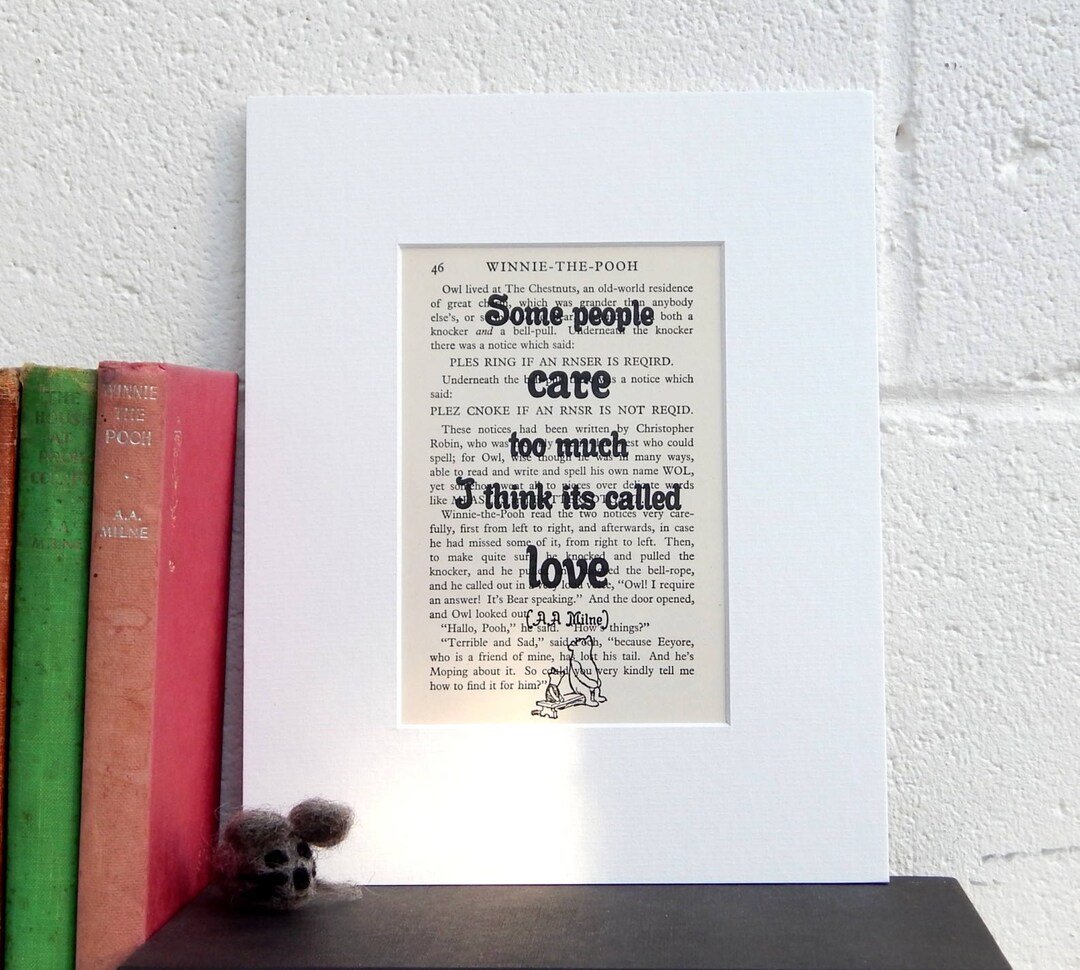
Few literary figures cast a shadow as long and as gentle as Winnie-the-Pooh. This honey-loving bear, often seen musing about friendship and life's simple pleasures, carries a cultural and literary legacy that spans continents and generations. But beneath the charming tales of the Hundred Acre Wood lies a deeper, richer history, one surprisingly rooted in the rugged landscapes of wartime Canada. His story isn't just about a boy and his bear; it's a testament to the power of imagination, the serendipity of history, and the enduring human need for comfort, companionship, and a touch of whimsy.
From his unassuming beginnings as a real bear cub to his transformation into a global icon, Pooh has become a cornerstone of childhood, a beacon of simple philosophy, and a cherished character whose influence permeates literature, film, and popular culture worldwide.
At a Glance: The Enduring World of Winnie-the-Pooh
- Surprising Origins: Winnie-the-Pooh's namesake, a real black bear cub, hailed from White River, Ontario, Canada, purchased by a Canadian soldier during World War I.
- Literary Genesis: A.A. Milne’s son, Christopher Robin, formed a bond with the real bear at the London Zoo, inspiring Milne to create the beloved stories and characters.
- Iconic Illustrations: E.H. Shepard's distinct drawings are inseparable from the Pooh stories, defining the visual identity of the Hundred Acre Wood.
- Timeless Themes: The tales explore universal lessons of friendship, innocence, empathy, and the quiet joys of life, resonating across all ages.
- Global Phenomenon: Translated into countless languages, adapted into hugely successful films and television series, and a massive merchandise empire.
- Canadian Pride: Canada proudly commemorates Pooh's origins with statues, festivals, and preserved archives, underscoring its foundational role in the bear's story.
A Bear from the Prairies: Winnie's Unlikely Canadian Roots
The journey of Winnie-the-Pooh begins not in the pastoral English countryside, but in the vast wilderness of Canada, far removed from the gentle anthropomorphic world A.A. Milne would later craft. Our story truly starts with Harry D. Colebourn, a British-born veterinarian who immigrated to Canada in 1905, settling in Winnipeg, Manitoba.
When World War I erupted, Colebourn, then a lieutenant, enlisted with the Canadian Expeditionary Force. His path to destiny diverged significantly on August 24, 1914. While en route by train across Canada, he made an impromptu stop at White River, Ontario. There, for a mere $20 (a sum equivalent to over $400 today), he purchased an orphaned female black bear cub from a trapper. This tiny, vulnerable creature would soon bear a name that would echo through literary history: "Winnipeg," affectionately shortened to "Winnie," after Colebourn's adopted hometown.
Winnie quickly became an unofficial mascot for the Second Canadian Infantry Brigade, her gentle nature captivating the soldiers. She accompanied Colebourn across the Atlantic to England in October 1914. As the brigade prepared for deployment to the brutal Western Front, Colebourn made a difficult decision. On December 9, 1914, he entrusted Winnie to the care of the London Zoo, ensuring her safety and promising to retrieve her after the war. Winnie became a star attraction, renowned for her extraordinary gentleness. Unlike most zoo animals, she was so mild-mannered that children were often allowed to enter her enclosure, feeding her and even riding on her back. This unusual access proved pivotal for one particular young visitor.
From Real Bear to Pooh Bear: A.A. Milne's Creative Spark
Among Winnie's most devoted admirers at the London Zoo was a young boy named Christopher Robin Milne. He was the son of Alan Alexander Milne, a prolific writer who had honed his craft as an assistant editor at the renowned Punch magazine. Christopher Robin formed a profound bond with Winnie, frequently allowed into her enclosure where he could play with the gentle bear. This unique connection left an indelible mark on the boy's imagination.
Inspired by his newfound furry friend, Christopher Robin renamed his own cherished teddy bear "Winnie." The "Pooh" part of the name came from a swan he once knew, blending two beloved childhood inspirations into one iconic moniker. Witnessing his son's imaginative play with his toys – which included not only the newly christened Winnie, but also a piglet, a donkey, a tiger, and others – A.A. Milne found a wellspring of creative genius.
Milne, already an established writer, began crafting stories for children, drawing directly from his son's world. His first collection of children's verse, "When We Were Very Young," debuted in 1924. Then, in 1926, the world was formally introduced to the beloved character Winnie-the-Pooh in the book of the same name. This was followed by "The House at Pooh Corner" in 1928, solidifying the universe of the Hundred Acre Wood. The distinctive and timeless illustrations by E.H. Shepard became an integral part of Pooh's identity, giving form to the characters and the idyllic landscape. While many of the other characters like Piglet, Eeyore, and Tigger were based on Christopher Robin's actual toy animals, the very foundation of Pooh—his name and origin—was, quite literally, Canadian.
Interestingly, Canada's connection runs even deeper. McClelland and Stewart of Toronto published the first Canadian edition of "Winnie-the-Pooh" in 1925, predating the UK editions. This often-overlooked detail further cements Canada's early and significant role in the bear's literary journey.
More Than Just a Story: The Enduring Themes of the Hundred Acre Wood
The magic of Winnie-the-Pooh transcends simple children's tales. Milne, through his gentle narratives, tapped into universal themes that resonate with readers of all ages, creating a literary landscape rich with warmth, wisdom, and understated profundity.
At its heart, the Pooh stories are a beautiful exploration of friendship and community. Each character, with their distinct quirks and foibles, contributes to the fabric of the Hundred Acre Wood. Pooh's unwavering loyalty, Piglet's cautious courage, Eeyore's melancholic observations, Tigger's boundless enthusiasm, Rabbit's practicality, and Owl's (often inaccurate) wisdom all blend to form a supportive, if sometimes chaotic, family. They teach us the value of acceptance, the power of helping one another, and the simple joy of shared experiences, whether it's a picnic, a walk, or a quiet conversation.
Milne masterfully captures innocence and childhood wonder. The world, as seen through the eyes of Christopher Robin and his animal friends, is a place of boundless possibility and gentle adventure. Finding the North Pole, exploring a sandpit, or simply looking for honey becomes a grand expedition. This perspective encourages us to slow down, appreciate the small moments, and rediscover the enchantment in the everyday.
Beyond adventure, the stories offer a surprising amount of simple philosophy. Pooh's thoughts, often uttered over a pot of honey, are deceptively profound. "A little consideration, a little thought for others, makes all the difference." Or, "You can't stay in your corner of the Forest waiting for others to come to you. You have to go to them sometimes." These are not complex philosophical treatises, but rather gentle reminders about empathy, initiative, and the importance of connection. The characters are remarkably relatable, embodying traits we see in ourselves and others. Who hasn't felt Piglet's anxiety, Eeyore's occasional gloom, or Pooh's simple desire for comfort and a good meal? This relatability makes the characters feel like old friends, their lessons softly imparted and easily absorbed.
To truly appreciate the timeless wisdom and simple joys woven into these narratives, it's worth revisiting the original tales. You can Explore the Classic Winnie the Pooh to immerse yourself once again in the gentle world that has charmed millions.
Winnie-the-Pooh's Global Paw Prints: A Cultural Phenomenon
From the quiet pages of A.A. Milne's books, Winnie-the-Pooh exploded into a truly global cultural phenomenon, touching lives in ways Milne himself could scarcely have imagined. His appeal proved universal, transcending language and cultural barriers.
The stories have been translated into numerous languages, allowing children and adults alike from Japan to Germany, Russia to Brazil, to meet Pooh, Piglet, and their friends. The straightforward prose and fundamental themes of friendship and love resonate universally, making the Hundred Acre Wood a comforting place for anyone, anywhere.
A significant part of Pooh's global reach can be attributed to Disney's influence and expansion. Beginning with animated shorts in the 1960s, Disney adapted Milne's characters for the screen, introducing them to new generations through feature films and television series. While distinct from the original E.H. Shepard illustrations, Disney's interpretations brought the characters to vibrant, moving life, cementing their place in popular culture. This expansion, however, also led to a massive merchandise empire. By 2002, Winnie-the-Pooh merchandise sales had exceeded an astonishing $5.9 billion, making him one of the highest-grossing fictional characters of all time. From plush toys and clothing to home decor and stationery, Pooh's gentle face became ubiquitous, a symbol of childhood and comfort.
Beyond children's entertainment and merchandise, Winnie-the-Pooh has also found a surprising place in adult intellectual discourse. Philosophy and psychology scholars have often examined the characters and their interactions, finding surprising depth in their simplicity. Books like The Tao of Pooh by Benjamin Hoff playfully explore Eastern philosophy through Pooh's innocent wisdom, demonstrating the stories' capacity to inspire reflection in unexpected ways. Pooh's enduring power lies in his ability to be both a simple children's character and a vessel for profound universal truths, making him a true icon of global culture.
Honoring the Legacy: Canada's Enduring Connection
While A.A. Milne gifted the world the stories, Canada holds a special, foundational pride in Winnie-the-Pooh's genesis. The nation proudly celebrates its connection to the beloved bear with various memorials and cultural touchstones, ensuring Harry Colebourn and the original Winnie are never forgotten.
White River, Ontario, the small town where Harry Colebourn first purchased Winnie, stands as a vibrant testament to this legacy. Every third weekend of August, the town hosts the annual Winnie’s Hometown Festival, a lively celebration that brings the community together in honor of their famous ursine resident. A prominent statue of Winnie greets visitors, reminding everyone of the bear cub's humble beginnings.
Further west, Winnipeg, Manitoba, Colebourn's adopted hometown and the inspiration for Winnie's name, also cherishes its role. Assiniboine Park is home to a magnificent bronze statue, unveiled in 1992 and crafted by William Epp, depicting Harry Colebourn gently holding Winnie. The park also houses the Pooh Gallery, which provides visitors with a deeper dive into the bear's history and connection to the city.
Even the London Zoo, Winnie's temporary home, recognizes its part in the tale. The zoo features statues and plaques acknowledging both Harry Colebourn and Winnie, including a bronze statue identical to the one in Winnipeg, symbolizing the shared custody of this remarkable history.
The Canadian literary connection extends to significant archival collections. The Colebourn Family Archive, a treasure trove of historical documents, photographs, and personal items relating to Harry Colebourn and Winnie, is preserved at Toronto Metropolitan University, the White River Heritage Museum, and the Assiniboine Park Conservancy. These collections offer invaluable insights into the true story behind the world's most famous bear.
Winnie-the-Pooh remains a significant fixture in Canadian popular culture. The CBC has featured the character extensively, ensuring his story continues to resonate with Canadians. The profound connection has also inspired adaptations such as the critically acclaimed 2004 television drama "A Bear Named Winnie," starring Michael Fassbender as Harry Colebourn. More recently, Lindsay Mattick, Colebourn’s great-granddaughter, penned the Caldecott Medal-winning children's book "Finding Winnie: The True Story of the World’s Most Famous Bear," bringing the real Winnie's story to a new generation of readers with grace and charm. These ongoing tributes underscore the deep and abiding pride Canada takes in its unexpected but undeniable role in the Pooh phenomenon.
Milne's Complex Relationship with His Creation
Despite the immense success and adoration bestowed upon Winnie-the-Pooh, A.A. Milne himself harbored a somewhat complicated relationship with his most famous creation. A prolific writer of plays, essays, and even detective fiction for adults, Milne often felt that Pooh overshadowed his other literary works. He had hoped for a broader legacy, yet found himself forever synonymous with the Hundred Acre Wood. This sentiment, however, doesn't diminish the love and care he poured into the stories. His ability to capture the authentic voice of childhood, the nuances of imaginative play, and the simple beauty of friendship was unparalleled. While he may have wished for recognition for his other endeavors, his lasting impact on generations of readers around the world is undeniably defined by the enduring magic of Winnie-the-Pooh.
Beyond the Pages: What Pooh Teaches Us Still
The cultural and literary legacy of Winnie-the-Pooh isn't just about record-breaking sales or charming animations; it's about the quiet wisdom embedded in his tales. For nearly a century, Pooh and his friends have offered us lessons that remain profoundly relevant in our increasingly complex world.
First, they teach us the value of friendship. In a world that often prioritizes achievement and individual success, the Hundred Acre Wood reminds us that true richness lies in our connections with others. Pooh's loyalty, Piglet's devotion, and the collective support of the community offer a timeless blueprint for meaningful relationships.
Second, Pooh gently encourages us to embrace simplicity. In our always-on, fast-paced lives, the bear's pursuit of honey and quiet contemplation serves as a powerful antidote. He reminds us that joy can be found in the small things: a shared moment, a simple treat, or the warmth of being understood. These stories invite us to slow down, breathe, and appreciate the present.
Finally, they celebrate the power of imagination. Milne transported us into a world where toys come alive, where everyday objects become tools for grand adventures, and where kindness is the prevailing force. This imaginative spirit is crucial for children and adults alike, fostering creativity, problem-solving, and empathy.
Winnie-the-Pooh's story, from its Canadian origins to its global impact, is a testament to the fact that some of the most profound truths are found in the simplest narratives. His legacy is a comforting reminder that sometimes, the best way to live is with a little less worry, a little more honey, and a lot more heart.