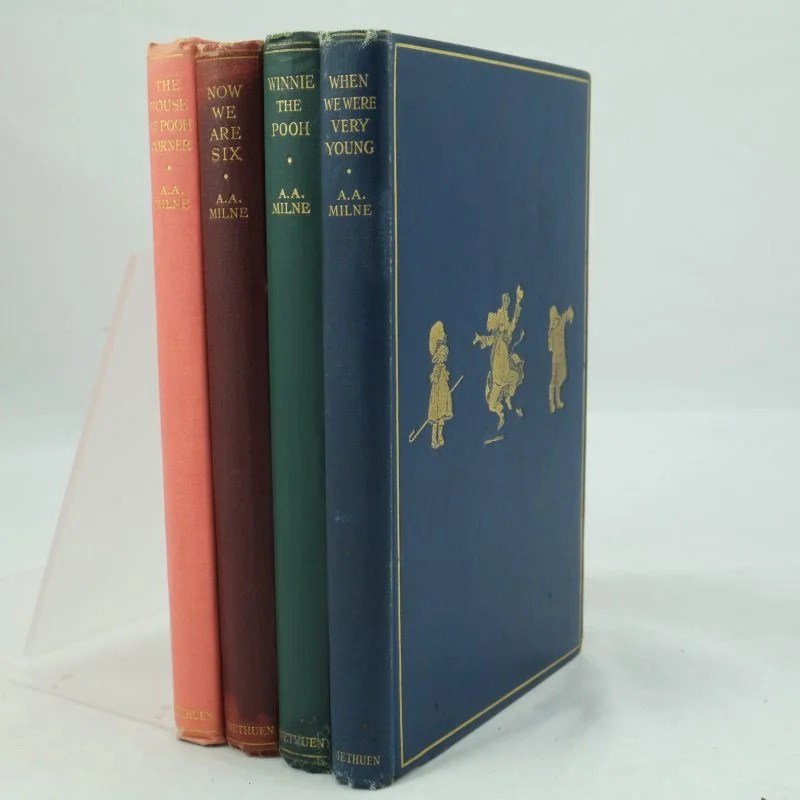
The world of Winnie-the-Pooh isn't just a collection of stories; it's a warm, comforting embrace, a philosophical treatise disguised as children's tales, and a timeless testament to the power of friendship and imagination. For many, the very mention of 'A.A. Milne's Original Pooh Books & Poetry' conjures images of a simple wooden bear, a shy piglet, and a boy named Christopher Robin, wandering through a sun-dappled Hundred Acre Wood. These aren't merely books you read; they're experiences you live, echoing across generations and reminding us of profound truths wrapped in gentle whimsy.
At a Glance: Milne's Enduring Legacy
- The Core Collection: Milne's Pooh universe spans four original books: two poetry collections (When We Were Very Young, Now We Are Six) and two prose storybooks (Winnie-the-Pooh, The House at Pooh Corner).
- Real-Life Inspiration: The characters, including Pooh Bear, Piglet, Eeyore, and Tigger, were based on Christopher Robin Milne's real toys, brought to life through his father's words.
- Iconic Illustrations: Ernest H. Shepard's pen-and-ink drawings are inseparable from the text, defining the visual identity of the Hundred Acre Wood and its inhabitants.
- Themes of Childhood: Explores profound ideas of friendship, loyalty, imagination, fear, and growing up with gentle humor and wisdom.
- Universal Appeal: While ostensibly for children, the books resonate deeply with adults, offering comfort, philosophical insights, and a touch of melancholy nostalgia.
- More Than Entertainment: A.A. Milne's works are literary masterpieces, celebrated for their exquisite prose, poetic rhythm, and emotional depth, predating many adaptations.
The Hundred Acre Wood's Origins: A Father, A Son, and A Bear
Before Winnie-the-Pooh became a global phenomenon, he was simply "Edward Bear," one of young Christopher Robin Milne's beloved stuffed animals. Alan Alexander Milne, a successful playwright and essayist, initially began writing poems and stories for his son, finding inspiration in their shared adventures and the imaginative world Christopher created with his toys. It was a serendipitous shift from adult literature to children's classics that would define his legacy.
The genesis of Pooh's world truly took root in their idyllic Sussex home, Cotchford Farm, which bordered Ashdown Forest – the very real landscape that became the fantastical Hundred Acre Wood. Here, Christopher Robin's toys, imbued with personality by his father's fertile imagination, began to speak, explore, and share their simple, profound lives. This authentic connection to a real childhood is the bedrock of the books' enduring charm.
Milne’s stories and poems were elevated to an art form by the exquisite illustrations of Ernest H. Shepard. Shepard, a fellow Punch cartoonist, not only drew what Milne described but imbued the characters with distinct personalities, expressions, and a timeless warmth that makes them instantly recognizable. His pen-and-ink drawings are so intertwined with Milne’s prose that it's nearly impossible to imagine Pooh, Piglet, or Eeyore any other way. The synergy between author and illustrator is a masterclass in collaborative storytelling, each enhancing the other to create a whole greater than its parts.
The Core Collection: A Journey Through Milne's Genius
To truly appreciate A.A. Milne's vision, you must immerse yourself in the original four books, each offering a distinct facet of the Hundred Acre Wood experience.
1. When We Were Very Young (1924)
This collection of poetry introduced many characters who would later become stars of the prose stories, most notably Winnie-the-Pooh himself (though here, he’s still Edward Bear). Filled with whimsical verses, observations on childhood, and the delightful adventures of Christopher Robin, the book captured the hearts of readers with its light touch and poignant moments. Poems like "Halfway Down," "Teddy Bear," and "Vespers" provide a gentle entry into Milne's rhythmic world, hinting at the adventures to come. It's often overlooked in favor of the prose, but it's essential for understanding the foundations of the Pooh universe.
2. Winnie-the-Pooh (1926)
This is where the magic truly unfolds. The first collection of Pooh stories, it introduces readers to the titular bear and his friends: Piglet, Eeyore, Owl, Rabbit, Kanga, and Roo. Each chapter is a self-contained adventure, from Pooh attempting to steal honey from bees to Eeyore losing his tail. Milne's prose is deceptively simple, yet rich with wit, warmth, and a deep understanding of childlike logic and emotion. It's here that Pooh's gentle philosophy and the charming dynamics of the group are firmly established, making it an irreplaceable cornerstone of children's literature.
3. Now We Are Six (1927)
Following the success of the first Pooh storybook, Milne returned to poetry with Now We Are Six. This collection deepens the exploration of Christopher Robin's world, featuring more poems about Pooh and his companions, alongside other imaginative childhood musings. There's a subtle maturation here, reflecting Christopher Robin's own growth. Poems such as "King John's Christmas," "Binker," and "Us Two" (which explicitly features Pooh) continue to showcase Milne's mastery of rhyme and meter, offering both humor and tender reflections on growing up. It serves as a beautiful poetic interlude between the two prose books.
4. The House at Pooh Corner (1928)
The final installment in the Pooh saga, this book brings Tigger bounding into the Hundred Acre Wood and features some of the most memorable and poignant stories. From Tigger's initial introduction and attempts to find a suitable food, to the game of Poohsticks and the invention of the Heffalump Trap, the adventures are as charming as ever. However, The House at Pooh Corner carries a bittersweet undertone as Christopher Robin prepares for school, hinting at the inevitable separation from his childhood world. The concluding chapter, "An Enchanted Place," is a powerful and emotional farewell that resonates deeply with anyone who has faced the end of a cherished era.
The Residents of the Hundred Acre Wood: More Than Just Plush Toys
The characters Milne created are so vividly drawn that they feel like old friends. Each possesses a distinct personality, making their interactions a rich tapestry of human (and animal) experience.
- Winnie-the-Pooh: The titular bear of little brain, Pooh is kind, simple, deeply loyal, and obsessed with honey. He's a philosopher without knowing it, often stumbling upon profound truths through his uncomplicated observations.
- Piglet: Small, timid, and easily frightened, Piglet is also fiercely loyal and capable of great bravery when his friends are in need. He reminds us that true courage isn't the absence of fear, but acting despite it.
- Eeyore: The gloomy donkey, perpetually expecting the worst, yet he's strangely endearing. His pessimism is a stark contrast to the optimism of his friends, and his quiet acceptance of his lot offers its own kind of dignity.
- Tigger: Bouncy, enthusiastic, and often oblivious, Tigger is pure, unadulterated joy and energy. He's a force of nature who brings both chaos and excitement to the Hundred Acre Wood.
- Rabbit: Orderly, practical, and a bit of a fussbudget, Rabbit is the organizer of the group, though his plans often go awry. He represents the desire for control in a world that often defies it.
- Owl: Pompous and verbose, Owl fancies himself the intellectual of the group, despite often getting things wrong. He's a reminder that wisdom isn't always found in big words.
- Kanga & Roo: The loving, protective mother and her energetic, curious joey, they represent family and the introduction of new dynamics into the established group.
- Christopher Robin: The central human figure, imaginative, kind, and the benevolent leader of his animal friends. He is the bridge between the real world and the magical Hundred Acre Wood.
These characters aren't just one-dimensional archetypes; they embody various facets of human personality and emotion, making them relatable to readers of all ages.
The Heart of Pooh's Philosophy: Simple Truths for Complex Times
Milne's Pooh books transcend mere storytelling. They offer a gentle, profound philosophy that feels remarkably relevant even today.
- Friendship and Loyalty: At its core, the Pooh universe is a celebration of friendship. The characters stick together through thick and thin, accepting each other's quirks and supporting one another without judgment. Pooh's loyalty to Piglet, or Piglet's small acts of bravery for Pooh, are constant reminders of this bond.
- Acceptance of Differences: The diverse personalities of the Hundred Acre Wood inhabitants — Pooh's simplicity, Eeyore's gloom, Tigger's exuberance — are not just tolerated but embraced. Their differences create a richer, more interesting community.
- The Joy of Simple Pleasures: Whether it's a walk with a friend, a pot of honey, or a game of Poohsticks, the stories emphasize finding happiness in the small, everyday moments. They're a quiet rebellion against the constant striving for more.
- Emotional Intelligence: Milne masterfully portrays a spectrum of emotions: joy, fear, sadness, loneliness, excitement. He teaches empathy by allowing readers to see these emotions expressed honestly and gently, offering solace and understanding without resorting to didacticism.
- Growing Up and Letting Go: Particularly in The House at Pooh Corner, there’s a poignant exploration of the end of childhood, the bittersweet transition from imaginative play to the responsibilities of the "real world." It acknowledges the pain of farewells while cherishing the memories.
- The Power of Imagination: The entire world of the Hundred Acre Wood is a testament to the boundless nature of a child's imagination. It reminds us of the importance of fostering creativity and finding wonder in the ordinary.
You might be surprised by how many life lessons are hidden within Pooh's simple adventures. They encourage kindness, patience, and a genuine appreciation for those around us.
Why These Books Still Matter: More Than Just Nostalgia
A.A. Milne's original Pooh books and poetry aren't merely nostalgic relics; they are literary touchstones that continue to captivate and educate.
Literary Merit and Artistic Collaboration
Milne's prose is a masterclass in understated elegance. His language flows with a poetic rhythm, full of charming turns of phrase and quiet wit. The conversations among the animals are remarkably natural, reflecting real human interaction. Coupled with E.H. Shepard's iconic illustrations, which breathe life into every character and scene, the books are a triumph of collaborative artistry. Shepard's lines are expressive, his compositions balanced, and his ability to convey emotion with a few strokes of ink is unparalleled. The art doesn't just decorate the text; it expands upon it, offering visual cues that enhance the narrative and the characters' personalities.
Emotional Development for Children
For children, these stories offer a safe and gentle introduction to complex emotions and social dynamics. They learn about friendship, compassion, handling fear (Piglet), dealing with sadness (Eeyore), and the joy of shared experiences. The absence of villains and high-stakes drama makes the Hundred Acre Wood a comforting space for young minds to explore fundamental human relationships without being overwhelmed. The stories subtly teach kindness and empathy by example, making them invaluable tools for fostering emotional intelligence.
A Refuge for Adults
Many adults return to the Hundred Acre Wood seeking solace from the complexities of modern life. Pooh's simple truths offer a refreshing perspective, a reminder to slow down, appreciate the small things, and prioritize genuine connection. The underlying melancholy in The House at Pooh Corner, specifically around Christopher Robin's impending departure for school, resonates deeply with adult experiences of change, loss, and the bittersweet nature of memory. They are comfort food for the soul, offering a sense of peace and understanding that few other books achieve.
If you're looking to revisit or introduce these timeless tales to a new generation, it's worth taking the time to Explore the classic Winnie the Pooh and understand their unique place in literary history.
The Original vs. Adaptations
While popular adaptations, particularly Disney's versions, have introduced Winnie-the-Pooh to millions, they often streamline the narratives and flatten some of the nuanced characterizations. The original books possess a quiet, thoughtful depth that differs significantly from the more boisterous, often lesson-driven animated interpretations. Milne's Pooh is less saccharine, more philosophical, and his world, while warm, also acknowledges touches of melancholy and the gentle march of time. Experiencing the originals allows readers to appreciate the subtle genius that laid the groundwork for all subsequent versions.
Navigating the World of Original Pooh: Editions and Authenticity
When you decide to delve into A.A. Milne's original Pooh books, you'll encounter a myriad of editions. To truly appreciate the authentic experience, here's what to look for:
Identifying True Original Editions
The definitive versions of Milne's books feature the iconic illustrations by Ernest H. Shepard. Any edition that does not include Shepard's original pen-and-ink drawings is not a true representation of the original work. While other artists have reinterpreted Pooh, it's Shepard's art that Milne collaborated with and that has shaped generations of readers' imaginations. Look for publishers known for preserving classic texts, such as Dutton (in the US) or Methuen (in the UK), which hold historical publishing rights. Sometimes, special anniversary editions will also carefully reproduce the original text and illustrations.
Hardcover vs. Paperback vs. Digital
- Hardcover: Often the best choice for a lasting collection. Many deluxe or collector's editions of the original four books are beautiful to hold, with quality paper and binding that does justice to Shepard's artwork. They are perfect for reading aloud and passing down.
- Paperback: More accessible and portable, paperback editions are great for travel or casual reading. Just ensure they still feature Shepard's illustrations.
- Digital: E-books can be convenient, but they sometimes lose the charm of Shepard's intricate drawings. High-resolution digital versions, particularly those designed for tablets, can be good, but nothing quite matches the tactile experience of turning a physical page. Be wary of poorly formatted or unauthorized digital versions that might omit or alter illustrations.
Audiobooks: The Voice of the Hundred Acre Wood
Listening to the Pooh stories can be a delightful experience, especially with classic narrators. The voice can bring a new dimension to the characters, emphasizing their unique personalities and Milne's charming prose. Seek out narrations by actors who understand the subtle humor and gentle cadence of the text. Often, classic narrators like Peter Dennis or Jim Broadbent are highly recommended for capturing the authentic spirit of the books.
Common Questions About Milne's Pooh
Readers often have questions that arise from the unique blend of reality and fiction in Milne's work, and the various adaptations that have followed.
Are the books appropriate for all ages?
Absolutely. While written for children, the depth of emotion, the gentle philosophy, and the exquisite prose make them deeply resonant for adults. Younger children will enjoy the simple stories and lovable characters, while older children and adults can appreciate the subtle humor, the insights into friendship, and the bittersweet undertones of growing up.
What's the difference between Milne's Pooh and Disney's Pooh?
The most significant difference lies in tone and thematic depth. Milne's Pooh stories are quieter, more contemplative, and often carry a gentle melancholy, especially in The House at Pooh Corner. They are literary works with complex language and subtle humor. Disney's Pooh, while charming, tends to be more overtly comedic, with simplified plots, more slapstick, and a generally more upbeat, less nuanced emotional landscape. The characters, while recognizable, often have their personalities exaggerated for broader appeal. Milne's original illustrations are also vastly different from Disney's brighter, more animated style.
Is Christopher Robin a real person?
Yes, Christopher Robin Milne was A.A. Milne's only son. The books, characters, and many of the adventures were directly inspired by Christopher Robin and his collection of stuffed animals. This real-life connection is a cornerstone of the books' authenticity, though it also brought complicated fame and challenges for Christopher Robin in his adult life.
Do the stories have lessons?
Yes, but not in a didactic, preachy way. The "lessons" in Pooh stories are woven naturally into the narratives. They subtly teach about friendship, empathy, kindness, problem-solving, acceptance of differences, and the beauty of simple joys. Milne rarely spells out a moral; instead, he allows the characters' actions and consequences to speak for themselves, trusting the reader to draw their own conclusions.
Bringing the Hundred Acre Wood Home: Engaging with Milne's Masterpiece
Engaging with A.A. Milne's original Pooh books is an experience that can enrich your life and the lives of those you share them with.
Reading Aloud: A Timeless Ritual
Reading the Pooh stories aloud is perhaps the most authentic way to experience them. Milne's prose has a musicality that truly shines when spoken. Take your time, lean into the characters' voices (Pooh's thoughtful pauses, Piglet's nervous squeaks, Eeyore's mournful tones). Don't rush the quiet moments; let the humor and the emotion unfold naturally. Reading aloud fosters connection and creates cherished memories, much like Christopher Robin's own imaginative play with his father.
Discussing Themes with Children (and Adults)
After reading a chapter or a poem, take a moment to discuss it.
- "How do you think Piglet felt when he was scared?"
- "What makes Pooh such a good friend?"
- "Why do you think Eeyore is always a little sad?"
- "What did you learn about being kind from that story?"
These questions can open up conversations about emotions, social interactions, and even philosophical concepts in an accessible way. For adults, discussing the bittersweet ending of The House at Pooh Corner can be a surprisingly profound experience, touching on themes of memory and change.
Creating Your Own "Hundred Acre Wood" Moments
The spirit of Pooh lives in simple adventures and imagination.
- Go for a walk in a local park or woods, imagining you're searching for Heffalumps or playing Poohsticks (a stick-dropping game from a bridge).
- Encourage imaginative play with stuffed animals.
- Bake a batch of "honey" cookies.
- Simply spend quiet time together, perhaps observing nature, much like Pooh and Christopher Robin.
These activities reinforce the core values of the books: simplicity, connection, and the magic found in everyday life.
Your Invitation Back to the Hundred Acre Wood
A.A. Milne's original Pooh books and poetry are far more than just children's stories; they are a timeless treasury of wisdom, humor, and heart. They remind us that the greatest adventures often unfold in the simplest moments, that true friendship is a treasure beyond measure, and that even a bear of "very little brain" can teach us profound truths about life.
So, whether you're rediscovering them for yourself, sharing them with a new generation, or simply seeking a quiet refuge from the bustling world, step back into the Hundred Acre Wood. You'll find a welcome embrace, a gentle chuckle, and perhaps, a deeper understanding of what truly matters. The magic Milne created so many years ago remains as potent and as essential as ever.